
DWI Second Offense
Facing Your Second DWI Charge in Houston? Here’s What You Need to Know
If you’ve already been through the criminal justice system for a prior DWI and are now facing a second DWI charge in Houston or the surrounding counties, the stakes are significantly higher. A second offense DWI in Texas is no longer treated as a simple mistake—it’s treated as a pattern. And with that perception comes harsher penalties, increased scrutiny, and fewer leniencies.
Whether your first DWI happened recently or years ago, you may be wondering: What exactly counts as a second DWI? And what will it mean for your case?
This page will walk you through everything you need to know about second-time DWI charges in Texas: what the law says, how your case might unfold, what penalties you're facing, and most importantly—how to protect your future. If at any point you need to speak to a lawyer, we're here to help. Your consultation is free, and your defense starts the moment you reach out.
If you've been arrested for DWI in Texas—especially in Houston or the surrounding counties—you're probably overwhelmed by legal jargon, confusing court procedures, and serious consequences. Before you can defend yourself, you need to understand what a DWI actually means under Texas law.
What Is a DWI in Texas?
If you've been arrested for DWI in Texas—especially in Houston or the surrounding counties—you're probably overwhelmed by legal jargon, confusing court procedures, and serious consequences. Before you can defend yourself, you need to understand what a DWI actually means under Texas law.
Under Texas Penal Code § 49.04, you can be charged with Driving While Intoxicated (DWI) if you operate a motor vehicle in a public place while intoxicated.
You are considered legally intoxicated if:
- Your blood alcohol concentration (BAC) is 0.08% or higher, or
- You’ve lost the normal use of your mental or physical faculties due to alcohol, drugs, or a combination of substances
Importantly, you don’t need to be “drunk” or over the legal limit to be arrested. If an officer believes you’re impaired—even slightly—you can still be charged with DWI.
Note: In Texas, “operating” a vehicle doesn’t necessarily mean driving. You can be arrested for DWI even if the car isn’t running—such as when you’re sitting in the driver’s seat with the keys nearby or using the engine for heat or AC while parked.
Substances That Can Lead to a DWI Charge
Most people associate DWI with alcohol, but Texas law defines intoxication far more broadly. A driver can be considered intoxicated if their faculties are impaired by:
- Illegal drugs: Cocaine, heroin, methamphetamine, MDMA, LSD, marijuana (even though legal in other states)
- Prescription medications: Oxycodone, Valium, Xanax, Ambien, Adderall, codeine, or any medication that impairs driving—even if prescribed
- Over-the-counter (OTC) medications: Antihistamines, sleep aids, cough suppressants (like those containing dextromethorphan), or anything that causes drowsiness or confusion
- Inhalants: Glue, spray paint, cleaning agents
- Combinations: Alcohol plus any of the above—even if individual amounts are low—can result in impairment and lead to a DWI arrest
The key takeaway: It doesn’t matter if the substance is legal. If it impairs your ability to safely operate a vehicle, you can be charged with DWI under Texas law.
What Qualifies as a Second DWI in Houston?
A second DWI in Texas occurs when you're arrested for Driving While Intoxicated and have one prior DWI conviction—regardless of how long ago it was or where it happened.
What Counts (and What Doesn’t):
- The prior conviction must be final. Dismissed cases, pretrial diversion, or deferred adjudication don’t count. A conviction overturned on appeal also doesn’t count.
- Out-of-state DWIs may apply. If the other state’s DWI laws are similar to Texas’s, the prior conviction can still be used to enhance your charge.
- Any motor vehicle counts. Whether your previous offense was in a car, motorcycle, or boat (BWI), it may qualify as a prior DWI.
- No time limit on prior convictions. A prior DWI from 15+ years ago still counts legally—but the gap may influence how the court views your case.
Texas will find old convictions. Even if your first DWI happened out of state before you moved here, it can still be used to enhance your current charge.
Aggravating and Mitigating Factors in a DWI Case
Not every DWI charge is treated equally under Texas law. In Harris County and surrounding jurisdictions like Galveston, Fort Bend, Montgomery, and Brazoria Counties, prosecutors and judges consider a range of aggravating and mitigating factors when evaluating a DWI case. These elements can significantly influence penalties, plea deal opportunities, and even the chance of dismissal.
What Are Aggravating Factors?
Aggravating factors are circumstances that make a DWI offense appear more dangerous or egregious, often leading to enhanced penalties, stricter probation terms, or even felony charges. These factors are treated as red flags to public safety and can seriously affect the outcome of your case.
Common aggravating factors include:
- High Blood Alcohol Concentration (BAC): A BAC of 0.15% or more can elevate a misdemeanor to a Class A offense.
- Presence of a Minor Passenger: Driving while intoxicated with a child under 15 in the car is automatically classified as a state jail felony, regardless of whether it’s your first offense.
- DWI Accident with Injury or Death: If your DWI involved a crash causing serious bodily injury or fatality, you may be charged with Intoxication Assault or Intoxication Manslaughter, both felonies with multi-year prison sentences.
- Prior DWI Convictions: Having one or more prior DWIs significantly raises the stakes, often converting your case to a felony and increasing the length of incarceration and license suspension.
- Open Container in the Vehicle: If an open alcoholic beverage is discovered in your vehicle during the stop, it triggers a mandatory minimum jail sentence, even for a first-time offense.
- Excessive Speed or Reckless Driving: Operating a vehicle in a dangerous manner—such as swerving, speeding, or running lights—while under the influence can be used by prosecutors to argue for enhanced sentencing.
These factors signal to the court that your DWI posed a greater risk to public safety—and prosecutors will often push for harsher consequences as a result. It’s essential to have a knowledgeable attorney who can identify potential defenses or challenge the accuracy and legality of the state’s claims.
What Are Mitigating Factors?
On the other hand, mitigating factors are elements of your case or personal history that can potentially reduce the severity of the penalties you face. These factors don’t excuse a DWI, but they can help argue for leniency, lighter sentencing, or eligibility for deferred adjudication or probation.
Mitigating factors may include:
- No Prior Criminal Record: A clean record can work in your favor, especially if this is your first brush with the law.
- Low BAC (Below 0.10%): A relatively low level of intoxication can sometimes be used to negotiate for reduced charges or non-disclosure eligibility.
- Cooperation with Law Enforcement: Politeness, honesty, and general cooperation during the stop and arrest may reflect positively during sentencing.
- Voluntary Enrollment in Alcohol Education or Treatment: Taking initiative to seek help before the court mandates it can demonstrate accountability and seriousness.
- Stable Employment or Community Ties: Judges may be more inclined to offer probation or reduced sentencing if you can demonstrate that you’re a contributing member of the community.
- Mistakes in Arrest Procedure: If your attorney can show that officers violated your rights during the stop, testing, or arrest, it may be possible to suppress key evidence or seek dismissal.
Each of these mitigating factors must be strategically presented to the court. That’s where legal representation becomes essential. An experienced DWI lawyer will not only know how to surface these elements but how to weave them into a compelling argument for a better outcome.
What to Do If You're Stopped or Arrested for DWI in Texas
Getting pulled over is stressful—but when you're suspected of DWI, what you do next can shape everything that follows: your charges, your record, even your license. Whether you've had a drink or not, your behavior during the stop and your decisions after an arrest matter. A lot.
Here’s how to protect yourself at every step.
During the Traffic Stop
Law enforcement in Harris, Montgomery, Galveston, Fort Bend, and Brazoria Counties follow set protocols when stopping drivers suspected of DWI. From the moment they approach your vehicle, officers are trained to observe your behavior, appearance, and speech. Here's what to expect—and how to respond:
1. Stay Calm, Respectful, and Still
- Keep your hands on the wheel.
- Avoid sudden movements.
- Be polite and collected—you’re likely on camera (dashcam or bodycam).
2. Provide Identification—But Be Mindful of Questions
You're legally required to give your:
- License
- Registration
- Proof of insurance
But you’re not required to answer questions like:
- “Have you been drinking?”
- “How many drinks?”
- “Where are you coming from?”
Instead, say:
“I’m happy to cooperate, but I prefer not to answer any questions without legal counsel.”
3. Know That Field Sobriety Tests Are Voluntary
You are not legally required to perform field sobriety tests in Texas. These roadside exercises are subjective and often used to justify arrests—even if you're tired, anxious, or dealing with medical conditions.
You can say: “I respectfully decline to take any field sobriety tests and would like to speak with an attorney.”
4. Understand the Consequences of Refusing a Chemical Test
After an arrest, refusing a breath or blood test can trigger automatic license suspension under Texas's "implied consent" law. In some cases, it might limit the state’s ability to gather BAC evidence—but it can also hurt your case if not handled strategically.
Ask: “Am I under arrest?”
If yes, chemical testing may proceed—with or without your consent, sometimes via warrant.
What to Say (and Not Say)
Smart, respectful responses can preserve your rights and support your defense. You can use phrases like:
- “I’d like to remain silent and consult a lawyer.”
- “I do not consent to field sobriety testing.”
- “Am I being detained, or am I free to go?”
- “I’d like an attorney before answering any more questions.”
Remember: you’re likely being recorded. Your tone, body language, and words all matter.
After an Arrest: Common Mistakes to Avoid
Even after the stop, many people unintentionally make things worse. Here’s what to avoid:
- Talking Too Much Without a Lawyer: Trying to explain your way out often backfires. Stay quiet. Be respectful. Ask for legal representation.
- Pleading Guilty Too Quickly: Even if you failed a test, your case may have legal defenses—such as an illegal stop, flawed test procedure, or eligibility for diversion. Talk to a lawyer first.
- Missing the License Hearing Deadline: You have 15 days from your arrest to request an ALR hearing to fight license suspension. Miss it, and your license will be suspended—even if charges are dropped.
- Posting on Social Media: Avoid sharing details about your case, your night out, or opinions about law enforcement online. It can be used against you.
- Delaying Legal Help: Every hour counts. Witnesses forget. Evidence disappears. The sooner you speak with a qualified DWI attorney, the better your chances of a positive outcome.
Bottom Line: Stay Quiet. Get Help. Take Action. A DWI stop or arrest is overwhelming—but how you respond makes all the difference. Protect your rights from the very first moment.
If you’ve been stopped or arrested for DWI in Southeast Texas, call Khalil Saman Law Firm immediately. We’re available 24/7 and have helped hundreds of first-time offenders navigate the courts, reduce penalties, and protect their future.
Sentencing for a Second DWI in Texas
A second DWI charge in Harris County or surrounding areas like Fort Bend, Montgomery, Brazoria, or Galveston is far more serious than a first. It’s considered a Class A misdemeanor under Texas Penal Code § 49.09(a), and courts view it as a warning sign of ongoing risk—not just a repeat mistake.
Here’s what to expect—and how the right defense can help.
Standard Penalties for a Second DWI
If convicted, you may face:
- Up to 1 year in jail
- Up to $4,000 in fines
- Driver’s license suspension (up to 2 years)
- Mandatory ignition interlock device
- DWI education courses & repeat offender programs
- Community service and possible supervised probation
Judges take second offenses seriously. While alternatives like probation are still possible, the terms are stricter and more closely monitored.
What Happens at Sentencing
If you plead guilty or are convicted, you’ll attend a sentencing hearing in County Criminal Court. At this hearing, prosecutors will emphasize your prior DWI and may push for tougher penalties, especially if your case involves aggravating factors (like a high BAC or crash). Your attorney can present mitigating circumstances—like job stability, treatment efforts, or family responsibilities—to push for lighter sentencing. You may also speak directly to the judge before sentencing is imposed.
Probation and Alternatives
Probation is still an option, but the courts are cautious. Conditions often include:
- Extended probation term (up to 2 years)
- Random drug/alcohol testing
- Alcohol monitoring devices or curfews
- Ignition interlock device on any vehicle
- 80–200 hours of community service
- DWI repeat offender education and victim impact panel
Violating probation can lead to jail time—and judges are far less forgiving the second time around.
No Deferred Adjudication
Unlike some first-time offenses, deferred adjudication is not available for second DWIs under Texas law. Even a clean BAC or non-aggravated circumstances won’t make you eligible.
Pretrial Diversion: Rare, But Possible
While most counties reserve diversion programs for first offenses, some (like Harris or Montgomery) may consider second-time offenders on a case-by-case basis, especially if:
- Your first DWI was 5+ years ago
- You’ve shown clear rehabilitation (e.g., treatment, AA)
- The current charge has no aggravating factors
Eligibility is rare—but worth discussing with your attorney.
When Sentencing Gets More Severe
Some factors can elevate your charge or sentencing:
- BAC of 0.15%+ = longer jail time and stricter interlock conditions
- Child under 15 in the car = felony charge
- Injury or death = felony charges for Intoxication Assault or Manslaughter
These situations often eliminate probation as an option and can lead to state jail or prison time.
Why Sentencing Is Just the Start
Even the best sentencing outcome for a second DWI carries long-term consequences—from a permanent record to career and insurance setbacks. A strong, experienced DWI defense attorney can help limit the damage and guide you toward the best possible resolution.
Charged with a second DWI in Harris County or nearby? Contact the Khalil Saman Law Firm today. We’ll fight for your future—with strategy, clarity, and experience.
Penalties for a Second DWI in Texas
Texas treats second-time DWI offenses more severely than first offenses. Even if no one was hurt and your BAC was barely over the limit, the fact that you have a prior conviction significantly increases your exposure to punishment.
Below is a breakdown of potential penalties depending on the specific details of your case:
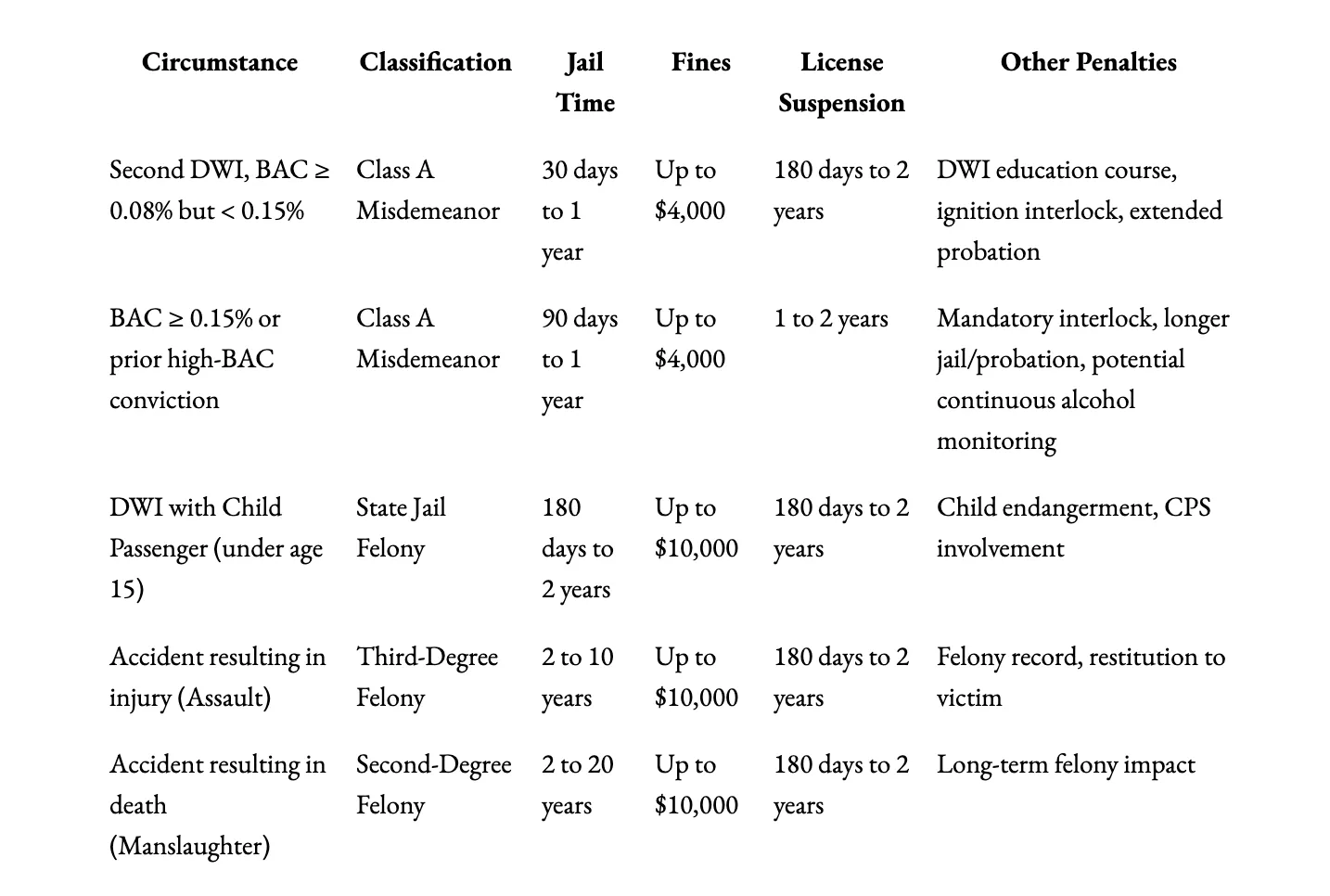
Breaking Down the Penalties
Let’s go beyond the chart and explore what these penalties really mean—and how they can affect you now and in the long term.
Jail Time: Unlike first offenses, jail time is often mandatory for second-time DWIs. Some courts may allow weekend or work-release jail schedules, but judges are far less lenient—especially in counties like Harris, Montgomery, and Fort Bend. Even if probation is granted, a short "shock" jail sentence (e.g., 72 hours) may be required.
Fines: Fines for second offenses are higher, and the true financial burden grows with added costs like ignition interlock installation, monitoring fees, probation supervision, and increased insurance premiums. The total expense for a second DWI can easily exceed $15,000.
Driver’s License Suspension: A second DWI conviction triggers a longer suspension period, especially if your prior offense was recent. Under the ALR (Administrative License Revocation) program, the suspension may range from 180 days to 2 years—and that’s separate from any criminal court-imposed suspension.
Your attorney can help you apply for an occupational license so you can continue driving to work, school, or necessary appointments.
Ignition Interlock Device: Courts will almost always require an ignition interlock for second-time offenders—whether as a condition of bond, probation, or reinstatement. Some judges may also order continuous alcohol monitoring (SCRAM devices) depending on the facts of the case.
These devices can be expensive, inconvenient, and socially stigmatizing—but they are mandatory under many sentencing agreements.
Additional Penalties That May Apply
- Community service (80–200+ hours typical)
- Mandatory alcohol treatment or rehab
- Victim impact panels
- Employment issues, particularly for commercial drivers, educators, and licensed professionals
- Travel restrictions to certain countries (Canada, for example)
- Repeat offender labels, which can impact future charges and sentencing outcomes
The Long-Term Consequences of a Second DWI in Houston
If you’ve already been through a first DWI, you might hope a second charge will follow the same path. But in Texas, a second DWI is treated far more seriously—with deeper legal consequences and longer-lasting effects on your life. It’s not just a repeat offense; it’s a red flag in the eyes of the law, employers, and insurance providers.
A Tougher Criminal Record
A second DWI conviction becomes a Class A misdemeanor, and it cements your status as a repeat offender in the criminal justice system. Unlike a first offense, a second DWI cannot be sealed through nondisclosure, and expunction is only available in rare, specific cases (such as dismissal or acquittal).
Your record will remain visible to:
- Employers
- Insurance companies
- Licensing boards
- Government agencies
- Landlords and housing offices
This level of visibility can follow you for life—and limit opportunities in both personal and professional spaces.
Skyrocketing Insurance Costs
Insurance companies treat a second DWI as an extreme risk indicator. You’ll likely face:
- Mandatory SR-22 coverage
- Dramatically increased premiums
- Possible cancellation of your auto or life insurance policies
A second conviction signals a pattern to insurers—and they’ll often act accordingly.
Job and Licensing Setbacks
With a second DWI, professional consequences can escalate quickly. Even if you keep your job, you may face:
- Suspension or revocation of a Commercial Driver’s License (CDL)
- Ineligibility for certain roles, especially in healthcare, education, transportation, and public safety
- Loss of security clearances or government contracts
- Disciplinary action from professional boards (e.g., law, nursing, finance)
These career disruptions can be long-term—and costly.
Immigration Risks
If you’re not a U.S. citizen, a second DWI conviction can jeopardize your immigration status. It may lead to:
- Delays or denials in green card or visa renewals
- Disqualification from naturalization
- Potential deportation proceedings
Even if your first offense caused no issues, a second charge can escalate your legal exposure.
Social and Emotional Consequences
The stigma of a second DWI can run deeper than the first. Friends, family, colleagues, and community members may begin to see it as a pattern—not a mistake. This can strain relationships, isolate you from social networks, and damage your personal reputation.
Harsher Penalties If There's a Next Time
Texas law escalates future consequences with each DWI. A third offense is a third-degree felony, carrying prison time, long license suspensions, and a permanent felony record.
Why This Defense Is Different
A second DWI demands more than a basic legal response—it requires a strategic, proactive defense. The outcome of this case will set the stage for your future freedom, finances, and reputation. A skilled DWI attorney can help minimize consequences, explore alternatives to jail, and protect what matters most.
If you’re facing a second DWI in Harris County or the surrounding areas, reach out to the Khalil Saman Law Firm today. We understand the stakes—and we’re here to help you navigate them.
Can Second Offense DWI Be Expunged or Sealed in Houston?
If you’ve been charged—or convicted—of a second DWI, you may be wondering whether it’s possible to clear your record. Unfortunately, the options are far more limited than they are for first-time offenders.
Expunction is the complete erasure of a criminal record, as if the charge never happened. It removes the arrest, booking, and court records from public and government databases. However, expunction is typically not available after a second DWI unless:
- Your case was dismissed without conditions
- You were found not guilty in court
- Charges were never formally filed and the statute of limitations has expired
If you were convicted of a second DWI, expunction is not an option.
Record sealing, or an order of nondisclosure, hides your record from most employers, landlords, and background checks—but not from law enforcement or certain state agencies. Unfortunately, Texas law does not allow record sealing after a second DWI conviction.
In rare cases, you might be eligible if:
- The second charge was dismissed
- You avoided conviction through deferred adjudication or pretrial diversion (which are uncommon for second offenses)
Because second offenses carry stricter legal consequences and fewer post-conviction options, it’s critical to talk to an experienced DWI defense attorney. They can evaluate your case, clarify whether any form of record relief is available, and help you take the next best step toward protecting your future.
Frequently Asked Questions About a Second Offense DWI in Houston
What qualifies as a second DWI offense in Texas?
Is a second DWI in Texas a felony?
What are the penalties for a second DWI conviction?
How long is the driver’s license suspension for a second DWI?
Will I have to install an ignition interlock device?
Can I get probation instead of jail time?
Can I expunge a second DWI from my record?
Do I need a lawyer for a second DWI charge?
What if my first DWI was out of state?
Can a second DWI be reduced to a lesser charge?
Why You Need a Houston DWI Lawyer for a Second Offense
A second-time DWI charge in Texas is a serious legal matter—not just a traffic offense. It can impact your license, job, finances, and criminal record. And without skilled legal guidance, you could face unnecessary penalties or miss critical deadlines, like the 15-day window to request a license hearing.
An experienced DWI attorney can challenge the stop, test results, or arrest procedures, and negotiate for reduced charges or alternative outcomes like probation or diversion. They also help you avoid common missteps, protect your rights, and position you for the best possible result.
At Khalil Saman Law Firm, we know the Harris County and surrounding courts inside and out—and we’re here to help you move forward with clarity, strategy, and support.
Get a Free Consultation for Your DWI Second Offense in Houston
If you’re facing your second DWI in Harris County or the surrounding areas—Montgomery, Fort Bend, Galveston, or Brazoria—you may feel overwhelmed. But you’re not alone, and you’re not out of options.
At The Saman Law Firm, we help good people navigate tough situations with experienced, strategic DWI defense. Whether you're trying to protect your license, avoid jail, or preserve your record, we’ll guide you through every step with skill and respect.
Schedule your free consultation today. We’ll listen without judgment and provide a clear plan for moving forward—because when it comes to DWI charges in Houston, experience isn’t optional. It’s essential.